
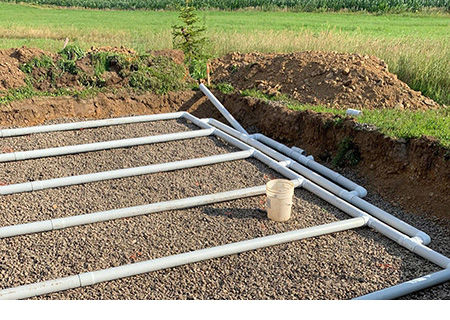
Evapotranspiration System
An evapotranspiration (ET) septic system is required in certain situations where conventional or aerobic septic systems can't safely or effectively treat and disperse wastewater—especially in dry, arid regions with poor soil absorption and high evaporation rates.
1. Poor or Non-Absorptive Soils
Clay, compacted, or impermeable soils don’t allow wastewater to percolate (absorb) into the ground.
ET systems don’t rely on soil absorption—instead, they release treated water into the atmosphere through evaporation and plant transpiration.
2. High Water Table or Bedrock
In areas where the groundwater is too close to the surface, it's unsafe to let wastewater seep underground—it could contaminate drinking water.
ET systems keep all wastewater above ground, preventing groundwater contamination.
3. Arid or Semi-Arid Climates
ET systems are ideal in hot, dry climates (e.g., West Texas, New Mexico, Arizona) where:
Evaporation rates are high
Rainfall is minimal
Plants can help transpire moisture from the soil
4. No Suitable Area for a Drain Field
Some properties are too small or poorly laid out for a traditional leach field.
ET beds are more contained systems and may be allowed where space is limited.
5. Environmental or Regulatory Requirements
Some local health departments or environmental agencies require ET systems when:
Soil percolation tests fail
Nearby surface waters must be protected
The risk of contamination is too high with a subsurface system